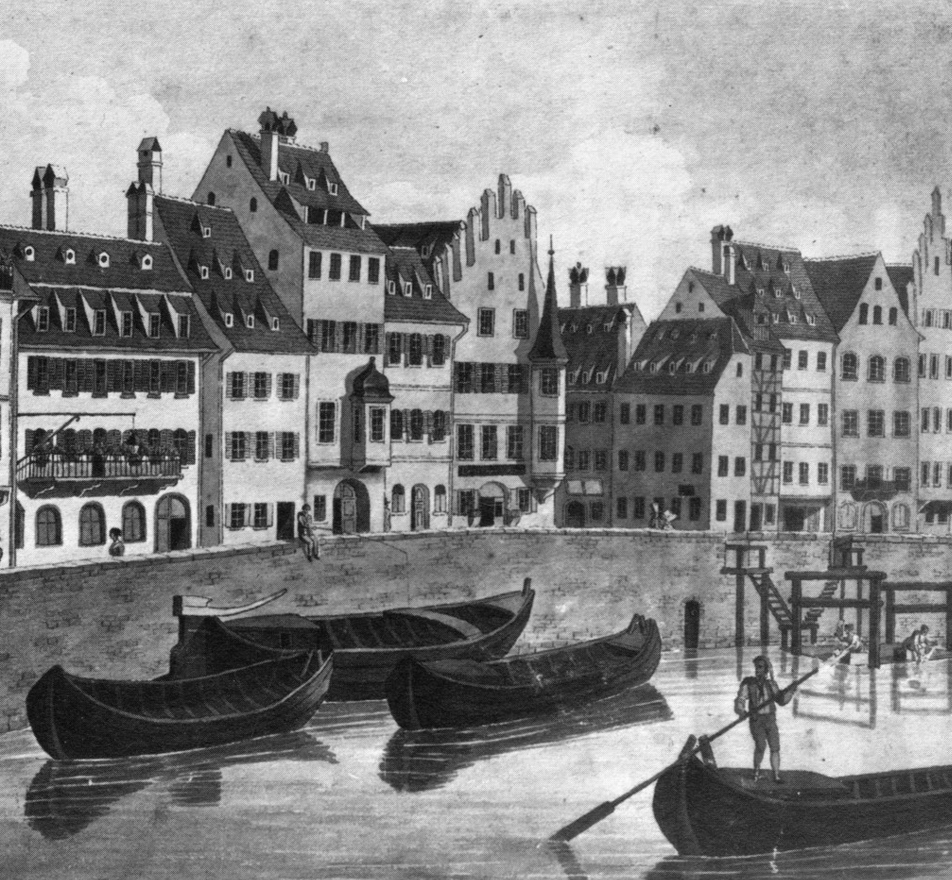
On a riverfront where the Ill reflects the rhythm of time, the historic quays of Strasbourg stretch in an unbroken line of façades, bridges, and watchful sculpted faces. Here, in the heart of the city’s oldest neighborhood, rests a building that has moved through centuries, bearing witness to the lives, ambitions, and quiet dramas of countless inhabitants. It is the kind of place that feels as if it has always existed … and always will. This is where STRASLOFT finds its home.
From the late 1500s, historical records show that the plot was already occupied, first by a saddler named André Butzmann, and later by a succession of craftsmen and merchants who called this place both workshop and shelter. The building was part of a vibrant tapestry of life along the water’s edge, where goods moved by boat and on foot, and where the clang of tools and voices spoke of a city in motion.
By 1769, the structure rose into a new phase under the ownership of Jean Michel Stribeck, a merchant of the city, and the hand of master mason Jean Lingenhœlin. What had been a modest dwelling was transformed, its façade re‑crafted in fine stone, its proportions adjusted to the aesthetics and demands of the time. The ground floor opened into elegant arches that invited light, sound, and movement, while the upper levels offered airy rooms gazing out toward the river.
But it was the four sculpted mascarons that anchored this building in both time and imagination. Carved to represent the four seasons, these faces, gentle, vibrant, contemplative, worn, have watched centuries of rain and sun, of winter chill and spring warmth. In spring and summer, their features convey a lightness that mirrors the flowering trees along the quay; in autumn and winter, they hold the quiet strength of survival. These mascarons are not mere ornamentation: they are guardians of memory, whispering of the rhythms that have shaped the community throughout the ages.
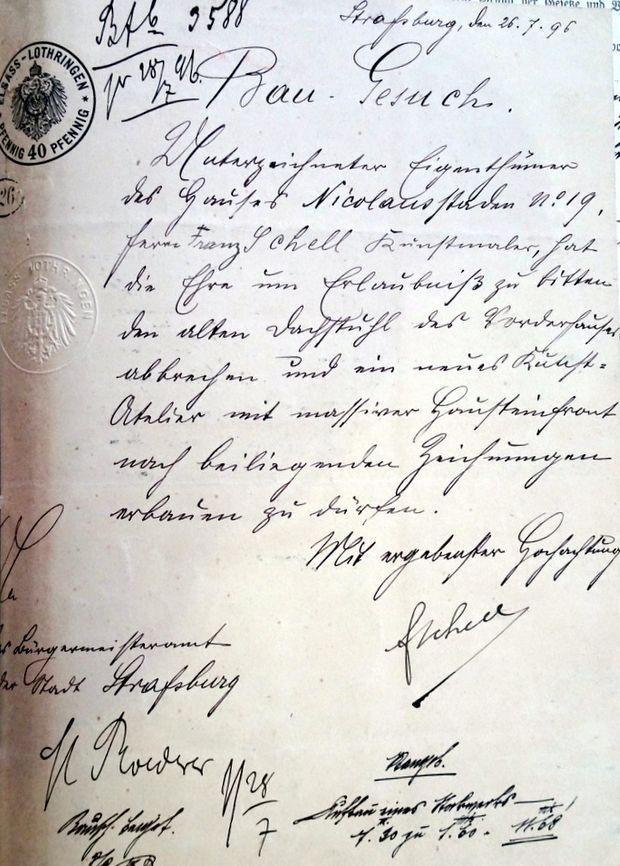
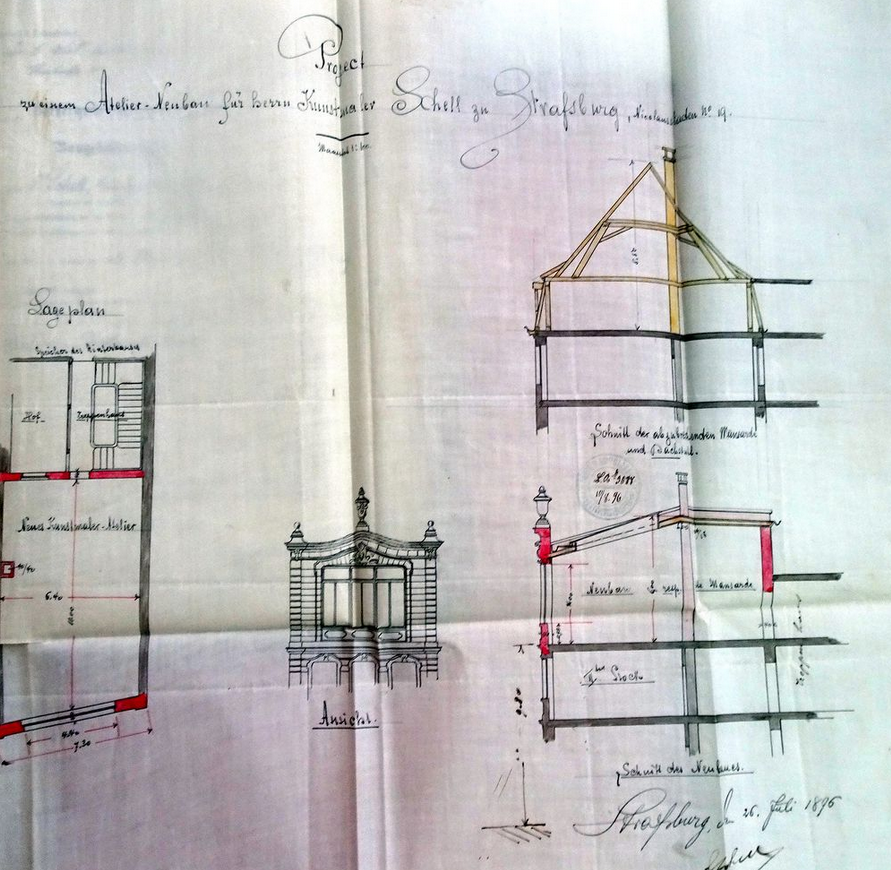
Life inside was never untouched by the tides of history. In the 19th century, the residence housed a stockbroker, a miller’s widow, and then, at the very top, an artist’s studio was installed in 1896, bringing light and creativity into what had been dark attic spaces. These transitions mark more than changes of ownership; they reflect the evolution of the quays from spaces of trade to places of living culture and creative life.
Around this building, the quay itself has shifted identities over the centuries, its name changing through time, its streets adapting to the growth of the city, and its neighbors welcoming institutions like the Musée Alsacien just a short stroll away, where the daily lives of earlier generations are re‑created in objects, costumes, and domestic scenes.
Just a few steps from your door, the Église Saint‑Nicolas rises with its gothic spire, a witness to spiritual life since the 1300s and a site where music and community have echoed for generations. In 1908, one of its aisles was the setting for a wedding led by Albert Schweitzer, a reminder that even the grandest figures of history have passed through these streets.
Walking along the quay, you feel the city’s layered story in every cobblestone and shuttered window. Cafés and galleries share space with buildings that have stood since before the French Revolution. The rhythm of life here is both gentle and deep, as if time moves at its own pace, carrying echoes of horse‑drawn carts, river barges, and the footsteps of generations who paused here to breathe, trade, love, and live.
Inside STRASLOFT, this history is not a backdrop but a presence. Exposed elements, thoughtful restoration, and the subtle integration of modern comfort make the apartment itself a continuation of the story, a space where the past is at once tangible and alive. Here, you are not simply a guest; you are part of an ongoing narrative that has been unfolding for more than four centuries along the water’s edge.
In a city shaped by tradition and transformation, the river reflects not just the passing seasons, but the persistence of human lives and memories — and this building, standing firm through it all, remains a silent but eloquent witness.